
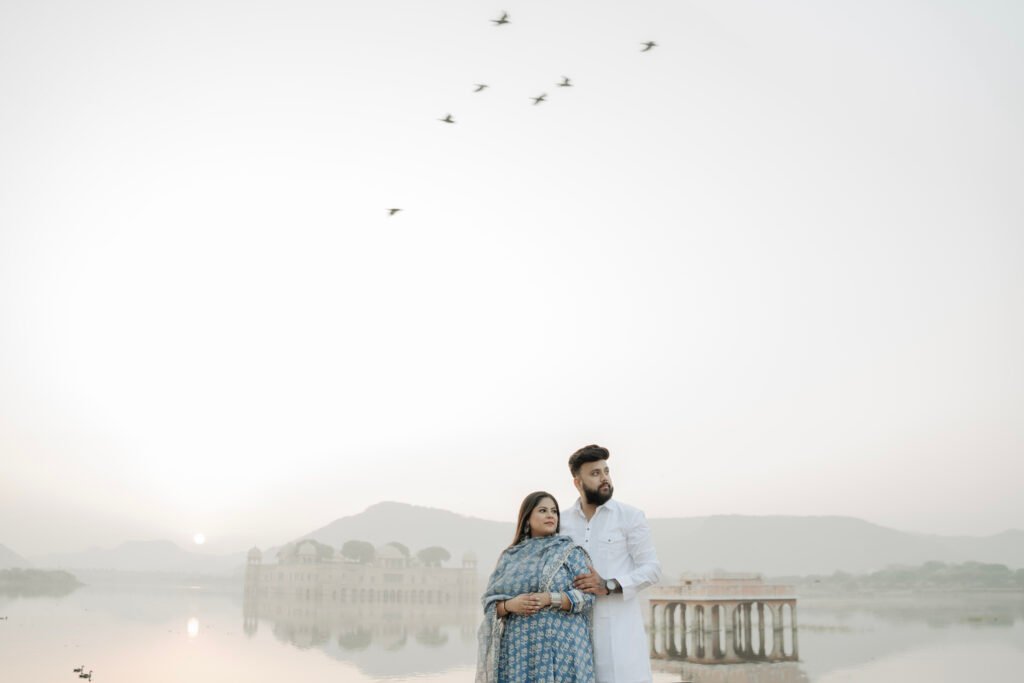
Jaipur, the “Pink City,” has solidified its position as India’s premier destination for high-end matrimonial cinematography in 2026. Among its many architectural jewels, the Jal Mahal (Water Palace) stands as an ethereal masterpiece, appearing to float gracefully in the center of the Man Sagar Lake. For couples seeking a synthesis of Rajput royalty and serene natural beauty, this Jal Mahal Pre-Wedding Photoshoot Guide is designed to transform your vision into a cinematic reality.
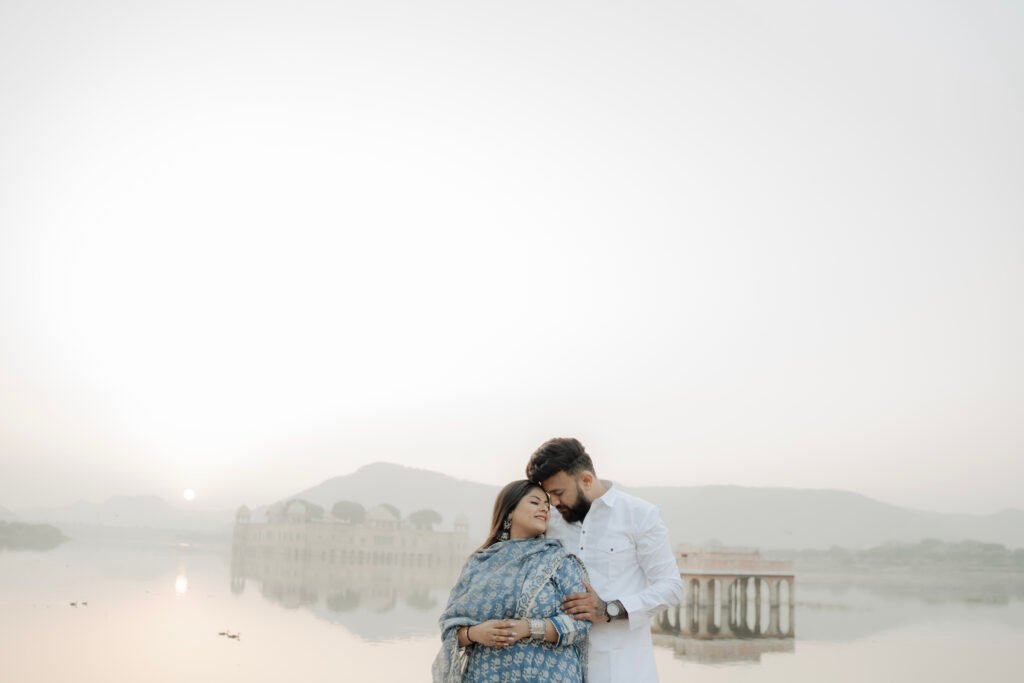
Executing a successful shoot at this iconic location requires more than just high-resolution gear. In 2026, navigating strict heritage permit regulations, understanding the physics of lakeside lighting, and choosing the right visual theme are essential for professional results. This guide by theframingstory provides a comprehensive framework to help you plan the perfect session.
Understanding Jal Mahal: The Foundation of Your Shoot
To capture the essence of Jal Mahal, one must first appreciate its historical and architectural depth. This isn’t just a backdrop; it is a monument of 18th-century engineering resilience that offers unparalleled narrative depth to your imagery.
History and Architecture of the Water Palace
Commissioned around 1734 by Maharaja Sawai Jai Singh II, the Jal Mahal was never intended as a primary residence. Instead, it served as a royal pleasure pavilion for duck hunting parties and moonlit picnics.
The palace is a five-story structure built from locally sourced red sandstone. A remarkable engineering feat is that when the Man Sagar Lake is at its peak capacity, the lower four floors remain completely submerged, leaving only the top floor visible above the water. The structure’s ability to withstand water pressure for over 250 years is attributed to a traditional mortar mix of lime, sand, and surkhi (crushed bricks) combined with organic additives like jaggery (gur), guggul, and methi (fenugreek) powder. For the photographer, the red sandstone provides a warm, ochre-colored canvas that shifts from pale amber at dawn to a deep crimson at sunset.
Why Jal Mahal Is Popular for Pre-Wedding Photography
The combination of the warm-hued architecture, the calm reflective surface of the water, and the surrounding Aravalli hills creates a tri-layered depth. This “mirage-like” quality is why Jal Mahal remains the most requested spot for couples wanting a “Dreamy and Tranquil” theme in our curated gallery of pre-wedding moments in Jaipur.
| Feature | Architectural Detail | Historical Context |
| Construction Era | Circa 1734 (Expansion in mid-18th Century) | Attributed to Maharaja Jai Singh II |
| Primary Material | Locally sourced Red Sandstone | Chosen for aesthetic warmth |
| Structural Layout | 5 Stories (4 Submerged, 1 Visible) | Submersion depths reach up to 15 feet |
| Decorative Style | Rajput-Mughal Fusion | Features octagonal Chhatris |
| Waterproofing | Lime-Jaggery-Methi Mortar | Traditional moisture-resistant science |
Strategic Timing: Lighting Dynamics at Man Sagar Lake
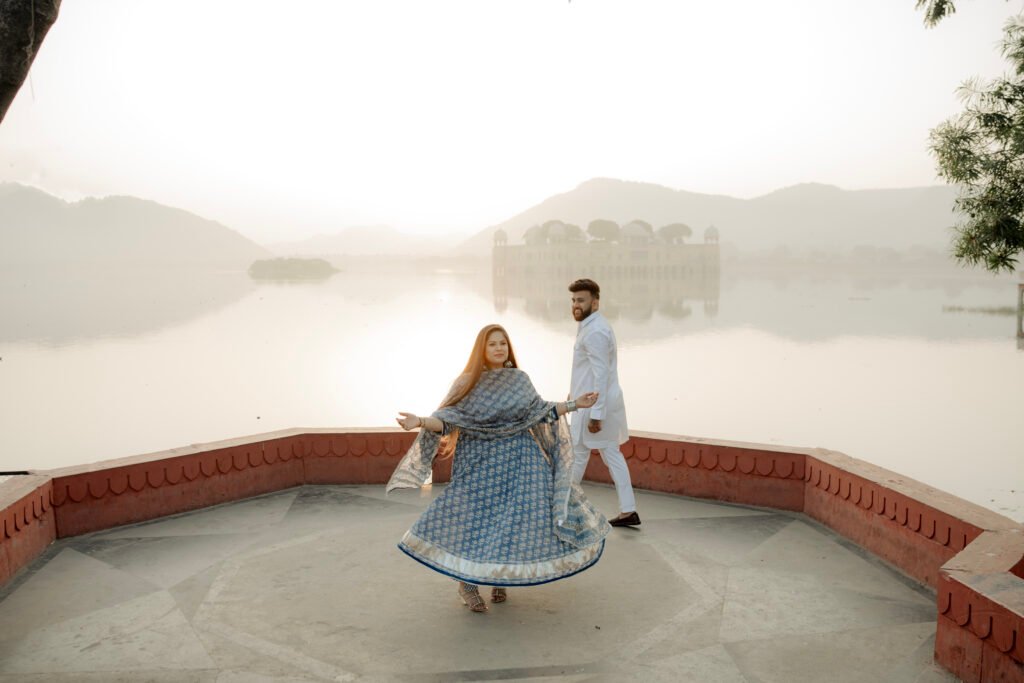
The core of this jal mahal pre wedding shoot Guide is mastering the interaction between solar positioning and the reflective surface of the lake. Lighting at the water is governed by distinct micro-climatic conditions that vary significantly by hour.
Golden Hour Magic: Sunrise and Sunset
The “Golden Hour” is the standard for high-end heritage photography. At Jal Mahal, sunrise and sunset offer distinct visual palettes:
- Sunrise (6:00 AM – 8:00 AM): This is the prime window for the iconic “Mirror Shot.” The water is typically at its calmest, reducing ripples. As the sun rises behind the photographer, it illuminates the palace facade directly, while the hills remain in a soft, shadowed contrast.
- Sunset (4:30 PM – 6:30 PM): The setting sun bathes the red sandstone in deep orange tones. During the “Blue Hour” (10-20 minutes after sunset), the palace is illuminated by artificial lights, creating a shimmering effect against the deepening indigo sky.
Seasonal Planning for Clear Weather
- Winter (October to March): The weather is pleasant ($15^{\circ}C$ to $28^{\circ}C$), visibility is high, and the lake is home to migratory birds like flamingos, pintails, and great crested grebes.
- Monsoon (July to September): High-risk, but offers lush greenery on the Aravalli hills and dramatic, cinematic cloud formations.
- Summer (April to June): Best avoided due to extreme heat ($40^{\circ}C+$) and harsh lighting that causes “flat” images.
Choosing the Best Shooting Spots Around Jal Mahal
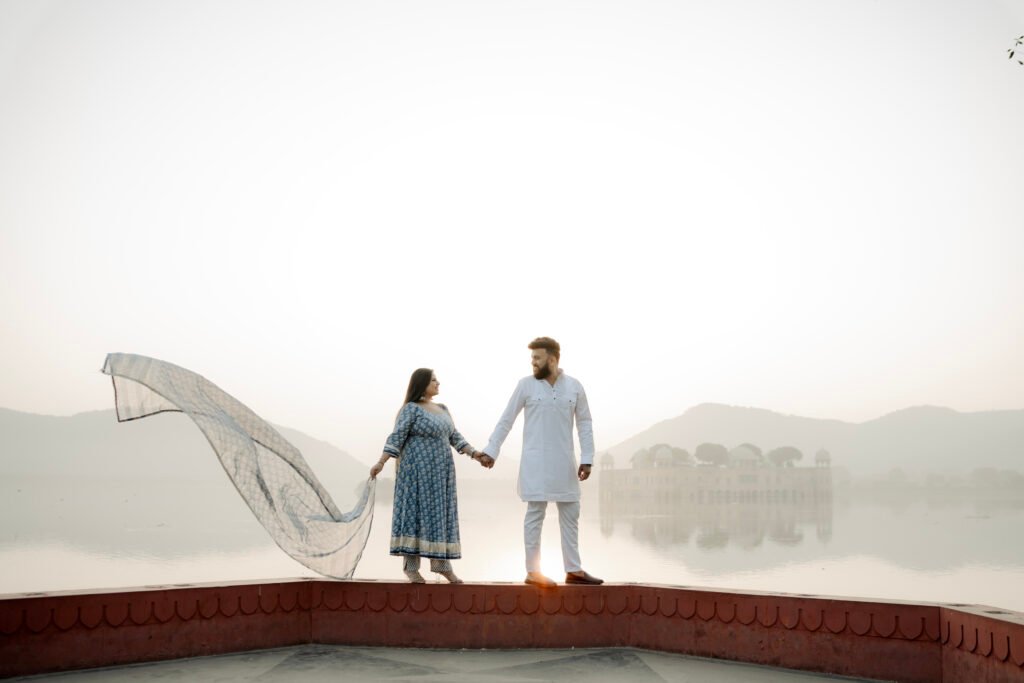
Since public entry into the palace interior is prohibited for conservation, your Jal Mahal Pre-Wedding Photoshoot Guide must focus on lakeside vantage points.
The Public Promenade (Amer Road Side)
The classic view is captured from the dam side along Amer Road. This location offers a full-frontal view of the palace’s symmetry. While it is popular with tourists, our professional pre-wedding shoot packages in Jaipur utilize specific techniques to eliminate distractions, such as moving to the water’s edge for lower-angle shots.
The Eastern Bank: The Professional’s Secret
For a more intimate perspective, the eastern bank is the superior choice. The lack of crowds on this bank allows for expansive “running” shots where the couple appears solitary amidst the vastness of the lake. This side is particularly effective at sunrise when the light hits the palace facade directly.
High-Altitude Perspectives: Nahargarh Fort
For a “bird’s-eye view,” integrate shots from the ramparts of Nahargarh Fort. From this elevation, the Jal Mahal appears as a tiny, exquisite jewel set in the middle of a silver tray. This is best captured during twilight when the city lights begin to twinkle around the lake.
Permissions, Rules, and 2026 Regulations
No Jal Mahal Pre-Wedding Photoshoot Guide is complete without navigating the legalities of professional photography in Rajasthan.
Professional Shooting Permits
While viewing Jal Mahal is free, professional shoots involving DSLRs, external lighting, or multiple crew members are classified as commercial productions. Under the (https://www.tourism.rajasthan.gov.in/content/dam/rajasthan-tourism/english/pdf/office-order-circulars/RFTPP25.pdf), the government has streamlined clearances via a Single Window System with a commitment to grant permissions within 15 days.
2026 Drone Photography Laws in India
Aerial cinematography is a staple of 2026 pre-wedding films, but must comply with the (https://digitalsky.dgca.gov.in/).
- Registration: Every drone over 250g must be registered to obtain a Unique Identification Number (UIN).
- Certification: Commercial operations require a valid Remote Pilot Certificate (RPC) from a DGCA-authorized school.
- NPNT Compliance: India follows a strict “No Permission, No Takeoff” (NPNT) policy. Unless a flight is digitally authorized, the drone’s software will prevent takeoff.
Planning Your Wardrobe: 2026 Color Trends
The choice of attire is a critical creative pillar. In 2026, wedding fashion has shifted away from traditional pastels toward “Bold Expression and Intentional Design.”
2026 Heritage Color Palettes
According to current trend forecasts, specific colors create the highest impact against red sandstone and blue water:
- Cobalt Blue: A striking choice that creates a powerful editorial contrast with the orange-red sandstone.
- Emerald Luxe: Rich emerald green radiates royalty and pairs beautifully with antique gold accents.
- Bordeaux Romance: Deep wine and berry tones evoke passion and timeless sophistication.
- Mocha Mousse & Silver: A modern “quiet luxury” palette that feels refined and understated.
| Palette Name | Key Colors | Target Vibe |
| Emerald Luxe | Forest Emerald, Antique Gold | Royal, Sophisticated |
| Bordeaux Romance | Bordeaux, Cream, Berry | Timeless, Passionate |
| Desert Sunset | Terracotta, Sage, Peach | Organic, Earthy |
| Plum Twilight | Aubergine, Lilac, Gold | Evening, Moody |
Technical Mastery: Equipment and Lens Selection
Capturing the palace from the shore requires a specific technical kit designed to manage distance.
Optics for Compression and Detail
A versatile 70-200mm f/2.8 telephoto lens is the most critical tool for your Jal Mahal session. It allows the photographer to compress the distance between the couple and the palace, making the monument appear larger and more imposing. For wide-angle environmental portraits that capture the scale of the lake, a 24-70mm lens is utilized.
Light Management with ND and CPL Filters
In the intense Rajasthan sun, Neutral Density (ND) filters are essential for achieving a cinematic look:
- 3-Stop ND Filter: Allows for wide apertures (e.g., f/2.8) in bright light, ensuring subject separation while maintaining sharpness.
- 10-Stop ND Filter: Used for creative long exposures to turn ripples into a smooth, glass-like surface.
- Circular Polarizer (CPL): Essential for managing water glare and enhancing the palace’s reflection.
Tips for a Successful jal mahal photoshoot
- Coordinate Makeup and Styling: Humidity near the lake can affect hair. Use professional artists who specialize in “sunrise-friendly” long-wear products.
- Manage Transportation: Arrive by 5:45 AM. Parking along Amer Road is ample in the morning but fills up quickly as the day progresses.
- Backup Plans: In case of weather issues, explore our blog on indoor heritage locations in Jaipur for secondary options.
Conclusion: Frame Your Story with Expertise
Choosing the right location is the first step in creating a timeless visual narrative. As this Jal Mahal Pre-Wedding Photoshoot Guide has shown, a successful shoot at the Water Palace is a blend of historical appreciation, technical precision, and regulatory compliance.
At theframingstory, we combine over 15 years of technical expertise with a deep love for Jaipur’s royal heritage. Let us help you curate an experience as deep and resilient as the ancient sandstone of the Jal Mahal. Reach out to our team today and let your love story unfold at the heart of the Man Sagar Lake.